
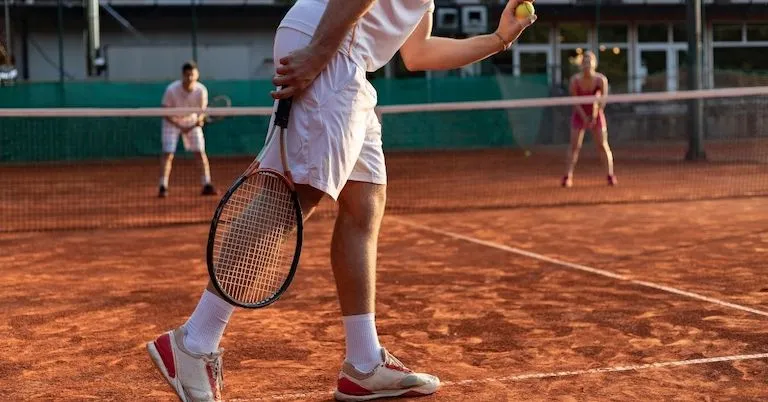
Clay court tennis is known for long rallies, high-bouncing shots and demanding movement. The surface slows the ball and gives players more time to defend, which changes how they build points. Power still matters, but patience, footwork, stamina and topspin often make the difference.
Rafael Nadal set the standard for clay court dominance, while players such as Carlos Alcaraz, Iga Swiatek and other modern champions have shown how the surface continues to reward adaptable and athletic tennis. Recent French Open champions, including Coco Gauff, Alexander Zverev and Mirra Andreeva, have also added to the history of clay court tennis.
This guide explains what makes clay different, which skills matter most and who has dominated the surface.
What Makes Clay Court Tennis Different?
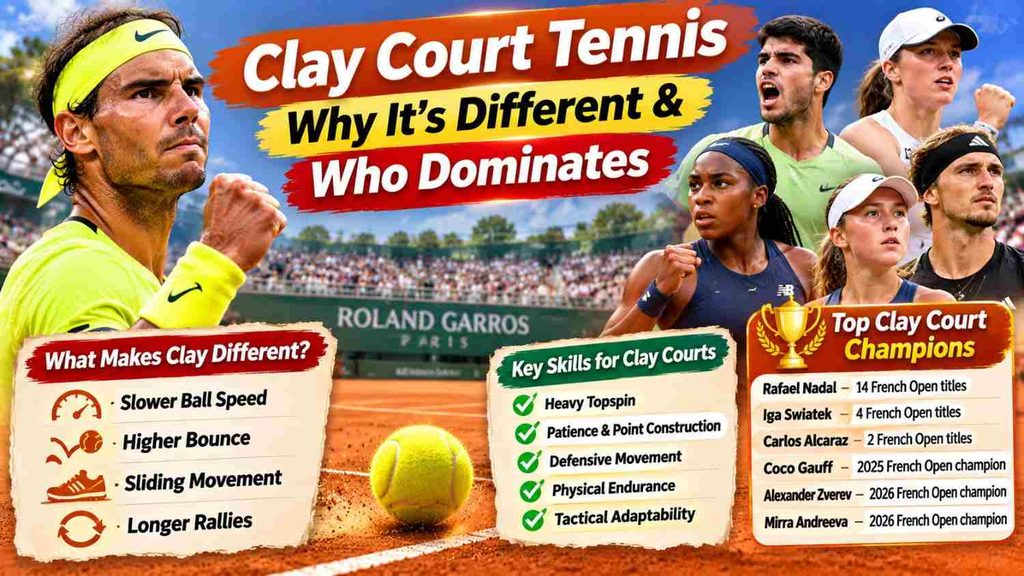
Clay is not simply a red version of a hard court. Its loose top layer changes the speed, bounce and movement of the ball. Players must adjust their footwork and shot selection to suit the conditions.
Traditional red courts at Roland Garros use crushed brick over layers of other materials. Green clay, commonly found in parts of the United States, uses a different material and generally plays differently. Clay courts can also vary in composition, so conditions are not identical at every tournament.
1. The Ball Moves More Slowly
Clay usually reduces the ball’s forward speed after it lands. This gives the defending player more time to reach shots that might become winners on grass or a faster hard court.
That does not mean every point becomes slow. Players can still attack with pace, but they often need to create a better opening before finishing the rally.
2. The Bounce Is Higher
Clay generally produces a higher bounce than grass. This suits players who use heavy topspin, especially on the forehand.
A high-bouncing ball can push an opponent behind the baseline and make it harder to attack from a comfortable position. Players who hit with topspin can use this extra bounce to control the rally.
3. Sliding Is Part of the Movement
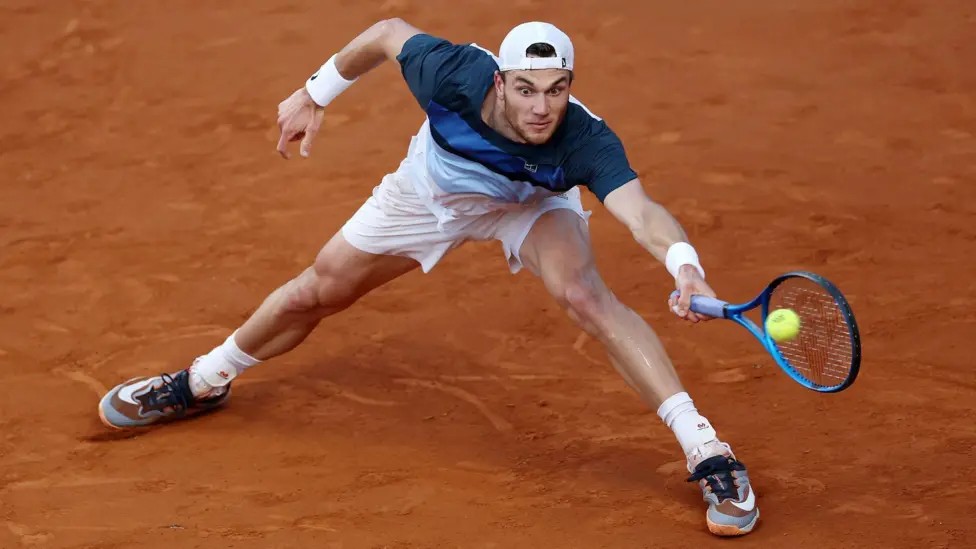
On clay, players often slide into shots rather than stopping suddenly. A controlled slide helps them reach wide balls, maintain balance and recover for the next shot.
However, sliding takes practice. Players need to judge their speed, body position and stopping distance. Those who cannot move confidently on the surface may struggle to defend effectively.
The WTA has highlighted how players such as Ons Jabeur and Elina Svitolina use sliding and balance to handle clay court movement.
4. Rallies Can Last Longer
Because the surface slows the ball, opponents often have more chances to return shots. Players must work harder to finish points and avoid making unnecessary errors.
This creates a physical and mental challenge. Stamina matters, but so does the ability to stay patient when a rally does not end quickly.
Clay Court Tennis: Which Skills Matter Most?
Clay rewards a combination of physical ability and smart decision-making. A powerful serve or forehand can still win points, but players need more than one strong weapon to dominate the surface.
The following skills are particularly valuable.
Heavy Topspin
Topspin makes the ball dip into the court and bounce higher. It helps players push opponents away from the baseline and create space for their next shot.
Patience and Point Construction
Players must build points instead of forcing winners too early. They often use deep groundstrokes, changes of direction and different amounts of spin to move opponents around the court.
Defensive Movement
Good clay court players can turn defence into attack. They use sliding, balance and quick recovery steps to reach difficult shots and regain control of the rally.
Physical Endurance
Long rallies and demanding matches require strong conditioning. Players need the fitness to maintain their movement and shot quality throughout a match.
Tactical Adaptability
Weather and court conditions can change how clay plays. Heat can make the surface and ball behave differently from cooler or damp conditions. Players must adjust their tactics rather than rely on one fixed game plan.
Who Dominates Clay Court Tennis?
Rafael Nadal is the most successful clay court player in men’s tennis history. However, several other players have built remarkable records on the surface. The women’s game also has its own outstanding clay court champions.
Best Clay Court Tennis Players in History
| Player | Major clay court achievement |
| Rafael Nadal | 14 French Open titles and 63 ATP clay court singles titles |
| Bjorn Borg | 6 French Open men’s singles titles |
| Novak Djokovic | 3 French Open men’s singles titles |
| Carlos Alcaraz | 2 French Open men’s singles titles |
| Alexander Zverev | 2026 French Open men’s singles champion |
| Chris Evert | 7 French Open women’s singles titles |
| Steffi Graf | 6 French Open women’s singles titles |
| Iga Swiatek | 4 French Open women’s singles titles |
| Coco Gauff | 2025 French Open women’s singles champion |
| Mirra Andreeva | 2026 French Open women’s singles champion |
The table lists selected achievements, not a ranking of players.
Rafael Nadal: The King of Clay
Rafael Nadal is widely regarded as the greatest clay court player of all time. His movement, heavy topspin forehand, physical strength and ability to defend difficult shots made him exceptionally difficult to beat on the surface.
He won the French Open 14 times between 2005 and 2022. He also collected 63 ATP clay court singles titles and finished his career with a 484-win and 51-loss record on clay.
His 81-match winning streak on clay between 2005 and 2007 remains one of the most remarkable achievements in tennis.
Bjorn Borg: A Pioneer of Clay Court Dominance
Bjorn Borg was one of the first players to establish extraordinary dominance at Roland Garros. He won six French Open men’s singles titles between 1974 and 1981.
His excellent movement, controlled groundstrokes and mental strength helped him handle the long rallies associated with clay. Borg also showed that success on clay could be built around consistency and tactical intelligence rather than power alone.
Novak Djokovic: An All-Court Champion
Novak Djokovic has won the French Open three times. His success on clay comes from his exceptional movement, return of serve and ability to absorb pressure.
He can defend deep behind the baseline and quickly change from defence to attack. His 2016, 2021 and 2023 French Open victories demonstrate his ability to succeed against the best clay court players of different generations.
Carlos Alcaraz: A Modern Clay Court Force
Carlos Alcaraz has established himself as one of the leading clay court players of his generation. He won the French Open in 2024 and 2025.
His speed, powerful forehand, drop shots and ability to change direction make him dangerous on the surface. He can defend from deep positions and then move forward to finish points.
Although he did not add another French Open title in 2026, his two consecutive victories remain major achievements in modern clay court tennis.
Alexander Zverev: 2026 French Open Champion
Alexander Zverev won the 2026 French Open men’s singles title after defeating Flavio Cobolli in the final. He secured a 6-1, 4-6, 6-4, 6-7(5), 6-1 victory on 7 June 2026 to claim his first Grand Slam singles title.
His powerful serve, strong baseline game and ability to compete in long rallies helped him succeed on the Paris clay. The victory was an important milestone in his career after previous appearances in Grand Slam finals.
Chris Evert: A Record Holder in Women’s Tennis
Chris Evert holds the women’s record for the most French Open singles titles, with seven victories.
Her consistency, accuracy and baseline control made her particularly effective on clay. She could maintain long rallies without giving away easy points and regularly forced opponents to take risks.
Steffi Graf: A Six-Time French Open Champion
Steffi Graf won six French Open women’s singles titles during her career. Her speed, powerful forehand and ability to attack from the baseline made her a dominant player on different court surfaces.
Her success at Roland Garros demonstrated how aggressive tennis could also be highly effective on clay.
Iga Swiatek: A Modern Clay Court Specialist
Iga Swiatek has become one of the leading clay court players of the modern era. She won four French Open women’s singles titles between 2020 and 2024.
Her strong forehand, excellent movement and ability to control rallies suit the surface. Growing up playing on clay also helped her develop the footwork and tactical awareness needed to succeed on it.
She did not add another French Open title in 2025 or 2026, but her four victories remain an outstanding record in the modern women’s game.
Coco Gauff: 2025 French Open Champion
Coco Gauff won the 2025 French Open women’s singles title after defeating Aryna Sabalenka in the final. She recovered from losing the first set to win 6-7(5), 6-2, 6-4.
Her athletic movement, defensive ability and mental strength helped her secure her first Roland Garros title. The victory was also her second Grand Slam singles championship.
Mirra Andreeva: 2026 French Open Champion
Mirra Andreeva became the 2026 French Open women’s singles champion after defeating Maja Chwalinska 6-3, 6-2 in the final on 6 June 2026.
The victory gave Andreeva her first Grand Slam singles title. At 19, she also became the youngest women’s singles champion at Roland Garros since Monica Seles in 1992.
Her opponent, Maja Chwalinska, was a 114th-ranked qualifier whose run made her the lowest-ranked finalist in French Open history. This made Andreeva’s composed performance in the final even more notable.
Andreeva’s movement, consistency and ability to construct points helped her perform strongly throughout the tournament.
Clay Court vs Hard Court vs Grass Court
Source Image: BBC
The three main tennis surfaces create different playing conditions. Understanding these differences helps explain why some players perform better on clay than on other courts.
| Feature | Clay Court | Hard Court | Grass Court |
| Ball speed | Generally slower | Medium to fast | Generally faster |
| Bounce | Higher | More predictable | Lower and less consistent |
| Rallies | Often longer | Varies | Often shorter |
| Movement | Sliding is common | More direct stopping and turning | Requires quick adjustment |
| Useful playing style | Topspin and baseline control | Balanced all-court game | Strong serving and attacking |
These are general tendencies. Court preparation, weather, ball type and tournament conditions can change how a surface plays.
Why Is Clay Court Tennis So Physically Demanding?
Clay can make players work harder because opponents have more opportunities to return shots. A player may need to hit several strong groundstrokes before finding a chance to finish a point.
The surface also requires repeated changes of direction. Players slide, recover, move forward and retreat throughout a match. This places considerable demands on their legs and overall conditioning.
Mental strength is equally important. A player may dominate a rally but still lose the point after an opponent produces another defensive shot. Staying focused and choosing the right moment to attack are essential.
The WTA’s analysis of clay court tennis highlights this combination of physical demands, tactical adjustments and mental patience.
Why Playing on Clay Can Improve Your Tennis
Clay court practice can help players develop skills that are useful on every surface.
- Better footwork: Learning to slide and recover can improve movement and balance.
- Improved shot selection: Longer rallies encourage players to construct points carefully.
- More consistent groundstrokes: Players get more opportunities to practise their backhand and forehand under pressure.
- Stronger endurance: Repeated movement and extended rallies develop match fitness.
- Greater patience: Players learn when to defend and when to attack.
Clay is not automatically easier or safer for every player. Sliding requires proper technique, and training loads should increase gradually to avoid unnecessary strain.
Conclusion
Clay court tennis is different because the surface slows the ball, creates a higher bounce and encourages longer rallies. Players need strong movement, stamina, topspin and patience to succeed.
Rafael Nadal remains the greatest clay court player in men’s tennis history, with 14 French Open titles and 63 ATP clay court titles. Chris Evert holds the women’s French Open singles record with seven titles. Among modern players, Carlos Alcaraz has won two French Open titles, while Iga Swiatek has claimed four.
The 2025 and 2026 French Open championships also highlighted the strength of the next generation. Coco Gauff won the women’s title in 2025, while Alexander Zverev and Mirra Andreeva became the men’s and women’s singles champions respectively in 2026. These achievements show how clay court tennis continues to reward movement, patience, fitness and tactical skill.
FAQs
Clay slows the ball and usually creates a higher bounce. This often leads to longer rallies and gives players more time to defend. Sliding is also a key part of movement on clay.
Rafael Nadal is widely considered the greatest clay court player in men’s tennis history. He won 14 French Open titles and 63 ATP clay court singles titles.
Clay is often more physically demanding because rallies can last longer and players cover more ground. Grass usually rewards quicker points, strong serving and attacking play. The difficulty depends on a player’s strengths and playing style.
Players slide to control their movement when reaching a shot. A well-timed slide helps them maintain balance, hit the ball and recover for the next shot.
Yes. Clay practice can help improve footwork, stamina, shot consistency, patience and point construction. These skills can also benefit players on hard and grass courts.
