
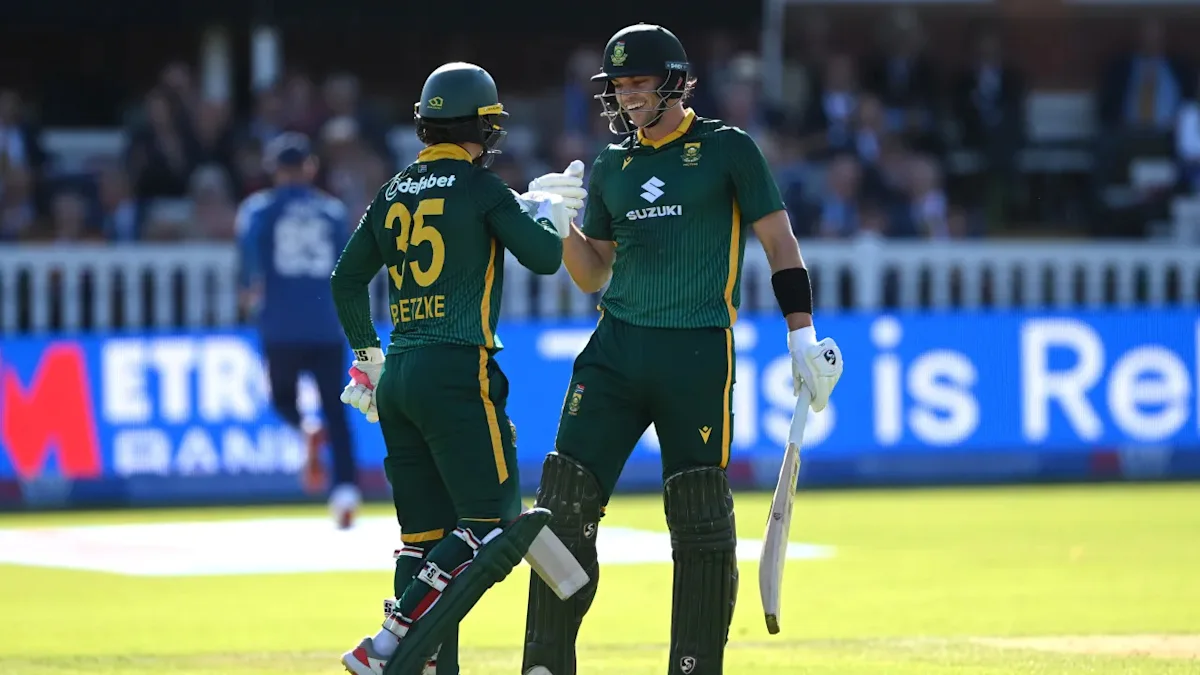
The highest successful run chase in men’s ODI cricket is South Africa’s 438/9 against Australia, achieved at the Wanderers Stadium in Johannesburg on 12 March 2006. South Africa chased a target of 435 runs and won by one wicket with one ball remaining.
Two more teams have crossed the 400-run mark while chasing: Sri Lanka, with 430/8 against England in October 2026, and India, with 406/2 against West Indies in September 2026.
The latest results have changed the all-time rankings. Here is a look at the top 10 successful ODI run chases, including the teams, scores, opponents, venues and match details.
Top 10 Highest Run Chases in ODI History

The following table ranks successful men’s ODI run chases by the final score achieved by the chasing team. Only matches won by the team batting second are included.
| Rank | Chasing Team | Score | Opponent | Venue | Year |
| 1 | South Africa | 438/9 | Australia | Johannesburg | 2006 |
| 2 | Sri Lanka | 430/8 | England | Rawalpindi | 2026 |
| 3 | India | 406/2 | West Indies | Guwahati | 2026 |
| 4 | Netherlands | 374/6 | Scotland | Dundee | 2025 |
| 5 | South Africa | 372/6 | Australia | Durban | 2016 |
| 6 | England | 364/4 | West Indies | Bridgetown | 2019 |
| 7= | India | 362/1 | Australia | Jaipur | 2013 |
| 7= | South Africa | 362/6 | India | Raipur | 2025 |
| 9= | Australia | 359/6 | India | Mohali | 2019 |
| 9= | England | 359/4 | Pakistan | Bristol | 2019 |
Statistics updated to 5 November 2026. Equal scores share the same ranking.
1. South Africa – 438/9 vs Australia (2006)
South Africa hold the record for the highest run chase in ODI history. They scored 438/9 in 49.5 overs against Australia at the Wanderers Stadium in Johannesburg on 12 March 2006.
Australia batted first and posted 434/4 in 50 overs. Captain Ricky Ponting led the innings with 164 runs from 105 balls. Michael Hussey added 81, while Simon Katich scored 79.
South Africa needed 435 runs to win. Herschelle Gibbs produced a remarkable innings of 175 from 111 balls, including 21 fours and seven sixes. Captain Graeme Smith contributed 90 from 55 deliveries.
Mark Boucher remained unbeaten on 50 and hit the winning boundary in the final over. South Africa won by one wicket with one ball remaining.
The match produced 872 runs, making it one of the most memorable contests in ODI history. This record chase has stood for more than two decades.
2. Sri Lanka – 430/8 vs England (2026)
Sri Lanka moved into second place with a remarkable chase against England on 22 October 2026 at Rawalpindi Cricket Stadium.
England batted first and scored 429/4 in 50 overs. Harry Brook led the innings with 202 from 116 balls, falling off the final delivery of the innings. Will Jacks remained unbeaten on 66 from 30 balls. Joe Root added 69.
Sri Lanka needed 430 runs to win. Pavan Rathnayake played a crucial innings of 130 from 106 balls. Avishka Fernando contributed 97 from 83 deliveries, while Dasun Shanaka scored 97 from 50 balls.
Sri Lanka reached 430/8 in 49.5 overs and won by two wickets with one ball remaining.
The result became the second-highest successful run chase in men’s ODI cricket. It also meant England’s huge total was not enough to secure victory.
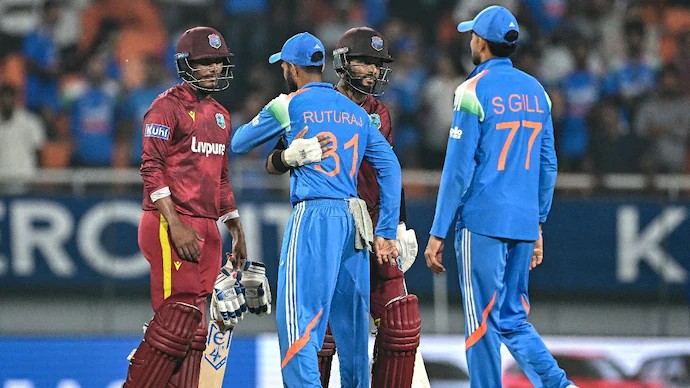
3. India – 406/2 vs West Indies (2026)
India produced a historic batting performance against West Indies in Guwahati on 30 September 2026.
West Indies batted first and scored 405/7 in 50 overs. Three of their batters reached centuries: John Campbell scored 101, Shai Hope made 104 and Amir Jangoo contributed 114.
India needed 406 runs to win. Shubman Gill remained unbeaten on 223 from 133 balls, while Rohit Sharma scored 101 from 75 deliveries.
The opening pair added 255 runs and gave India a strong start. India reached 406/2 in 43.3 overs and won by eight wickets with 39 balls remaining.
Gill’s double century was the standout performance. India became the second team to chase more than 400 runs in men’s ODI cricket, after South Africa in 2006. Sri Lanka joined them three weeks later.
4. Netherlands – 374/6 vs Scotland (2025)
The Netherlands produced an outstanding chase against Scotland on 12 June 2025 at Forthill in Dundee.
Scotland batted first and scored 369/6 in 50 overs. George Munsey was the leading scorer with 191 from 150 balls. Matthew Cross also made a useful contribution of 59.
The Netherlands needed 370 runs to win. Max O’Dowd anchored the chase with an unbeaten 158 from 130 balls, the highest individual ODI score by a Netherlands batter. Teja Nidamanuru contributed 51.
The Netherlands reached 374/6 in 49.2 overs and secured a four-wicket victory with four balls remaining.
O’Dowd was named Player of the Match. The Netherlands kept the required scoring rate under control and completed one of the biggest successful chases by an Associate cricket team.
This result placed the Netherlands among the leading teams in the all-time ODI run chase rankings.
5. South Africa – 372/6 vs Australia (2016)
South Africa recorded another major run chase against Australia on 5 October 2016 at Kingsmead in Durban.
Australia scored 371/6 in 50 overs. David Warner and Steve Smith both scored centuries, putting their team in a strong position.
South Africa needed 372 runs to win. David Miller delivered a match-winning performance with an unbeaten 118 from 79 balls. Quinton de Kock also played an important innings of 70.
Miller received strong support from Andile Phehlukwayo, who scored 42 not out. Their partnership helped South Africa reach 372/6 in 49.2 overs.
South Africa won by four wickets with four balls remaining. At the time, it was the second-highest successful run chase in ODI cricket.
6. England – 364/4 vs West Indies (2019)
England chased down 361 runs against West Indies on 20 February 2019 at Kensington Oval in Bridgetown.
West Indies posted 360/8 in 50 overs. Chris Gayle scored 135 from 129 balls and helped his team set a challenging target.
England responded with an aggressive batting performance. Jason Roy scored 123, while Joe Root made an unbeaten 102. Their centuries helped England control the chase.
England reached 364/4 in 48.4 overs and won by six wickets with eight balls remaining.
The result set a new record for England’s highest successful ODI run chase at the time. It also showed how quickly a strong opening partnership can change a high-scoring match.
7. India – 362/1 vs Australia (2013)
India completed a memorable chase against Australia on 16 October 2013 at the Sawai Mansingh Stadium in Jaipur.
Australia batted first and scored 359/5 in 50 overs. Captain George Bailey helped his team post a challenging total.
India reached 362/1 in only 43.3 overs. Shikhar Dhawan scored 95, while Rohit Sharma remained unbeaten on 141.
Virat Kohli also produced a brilliant innings, scoring an unbeaten 100 from just 52 balls. His aggressive batting helped India finish the chase with nine wickets remaining.
India won by nine wickets with 39 balls to spare. The result was one of the biggest successful chases in ODI cricket at that time.
8. South Africa – 362/6 vs India (2025)
South Africa completed a major chase against India on 3 December 2025 in Raipur.
India batted first and scored 358/5 in 50 overs. Ruturaj Gaikwad scored 105, while Virat Kohli contributed 102.
South Africa needed 359 runs to win. Aiden Markram played a key role with 110 from 98 balls. His century helped South Africa maintain control during the chase.
South Africa reached 362/6 in 49.2 overs and won by four wickets.
The final score equalled India’s 362/1 against Australia in 2013, so both chases share the same position in the rankings.
9. Australia – 359/6 vs India (2019)
Australia chased down 359 runs against India on 10 March 2019 at the Punjab Cricket Association Stadium in Mohali.
India batted first and scored 358/9 in 50 overs. Shikhar Dhawan led the innings with 143 from 115 balls, while Rohit Sharma scored 95.
Australia responded with a strong batting display. Peter Handscomb scored 117, while Usman Khawaja contributed 91.
Ashton Turner played a decisive role towards the end, scoring an unbeaten 84 from 43 balls. Australia reached 359/6 in 47.5 overs and won by four wickets.
The victory levelled the five-match ODI series at 2-2 and gave Australia one of their memorable wins on Indian soil.
10. England – 359/4 vs Pakistan (2019)
England completed a successful chase of 359 against Pakistan on 14 May 2019 at the County Ground in Bristol.
Pakistan scored 358/9 in 50 overs. Imam-ul-Haq was the leading batter with 151 from 131 balls, while Asif Ali added 52.
England needed 359 runs to win. Jonny Bairstow led the chase with 128 from 93 balls. Jason Roy also scored 76, giving England a strong start.
England reached 359/4 in 44.5 overs and won by six wickets with 31 balls remaining.
The result became one of England’s biggest successful ODI chases. It also showed the impact of an attacking opening partnership in a high-scoring match.
Which Team Has the Highest Successful Run Chase in ODI Cricket?
South Africa hold the record for the highest successful run chase in ODI cricket. They scored 438/9 against Australia at the Wanderers Stadium in Johannesburg on 12 March 2006.
Australia batted first and posted 434/4 in 50 overs. South Africa needed 435 runs to win and reached 438/9 in 49.5 overs. Herschelle Gibbs scored 175 from 111 balls, while captain Graeme Smith contributed 90 from 55 deliveries. Mark Boucher remained unbeaten on 50 and hit the winning boundary.
South Africa won by one wicket with one ball remaining. Their 438-run total remains the highest successful chase in men’s ODI history, ahead of Sri Lanka’s 430/8 against England in 2026.
What Makes a Successful ODI Run Chase Difficult?
Source Image: India Today
Chasing a large total in ODI cricket requires more than aggressive batting. Teams need to balance scoring speed with wicket preservation.
A few factors often decide the result:
1. Strong Opening Partnerships
A solid opening partnership gives the chasing team a good foundation. It reduces pressure on the middle order and helps control the required run rate.
2. Maintaining the Required Run Rate
Batters must keep scoring regularly. If they allow the required rate to rise too much, the final overs become difficult.
3. Building Partnerships
Teams need partnerships across different stages of the innings. One batter can attack while the other controls the situation.
4. Finishing the Match Under Pressure
The final overs often decide a close chase. Teams need calm decision-making, smart strike rotation and the ability to find boundaries when required.
Highest Run Chase in Men’s ODI World Cup History
Pakistan hold the record for the highest successful run chase in men’s ODI World Cup history. They scored 345/4 against Sri Lanka in Hyderabad on 10 October 2023.
Sri Lanka batted first and posted 344/9. Pakistan chased the target in 48.2 overs and won by six wickets.
Mohammad Rizwan scored an unbeaten 131, while Abdullah Shafique made 113. Their centuries helped Pakistan complete a memorable World Cup victory.
This record is separate from the overall ODI record because it includes only matches played in the Cricket World Cup.
Conclusion
South Africa’s 438/9 against Australia remains the highest successful run chase in ODI history. Sri Lanka’s 430/8 against England and India’s 406/2 against West Indies now occupy the next two positions.
The Netherlands, England, Australia and India have also produced memorable high-scoring chases. These matches show how strong partnerships, controlled aggression and calm batting under pressure can turn even a huge target into a winning total.
Frequently Asked Questions (FAQs)
South Africa hold the record with 438/9 against Australia at Johannesburg on 12 March 2006. They chased a target of 435 and won by one wicket.
South Africa have the highest successful run chase in men’s ODI cricket. They scored 438/9 against Australia in Johannesburg in 2006.
South Africa, India and Sri Lanka have successfully chased targets of more than 400 in men’s ODI cricket. Their scores were 438/9, 406/2 and 430/8 respectively.
India’s highest successful ODI run chase is 406/2 against West Indies in Guwahati on 30 September 2026. India won by eight wickets.
Pakistan hold the record with 345/4 against Sri Lanka during the 2023 ODI World Cup in Hyderabad. They won by six wickets.
